
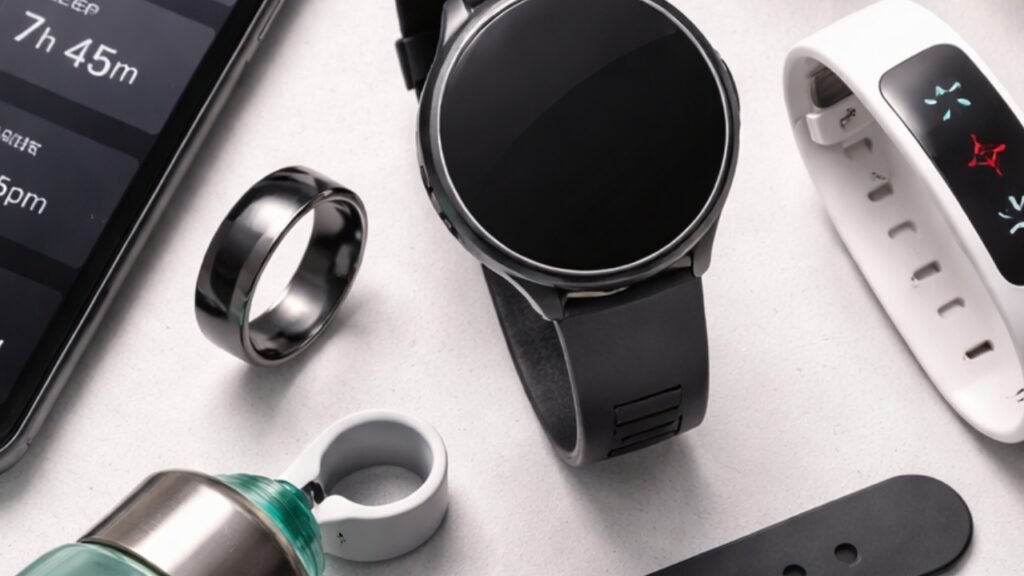
Tools to understand your body, not control it
Wearables can be incredibly powerful, when you understand what they are for. They are not there to judge you, pressure you, or tell you whether you have failed before breakfast. At their best, they are mirrors. They reflect patterns you might otherwise miss, and give you the chance to respond with intention rather than guesswork.
The problem starts when data becomes instruction. A low score becomes a reason to stop. A high score becomes permission to push, even when something feels off. The real value of wearables comes when you zoom out and use the information to guide better decisions over time, not to control your behaviour day by day.
Sleep Scores, Zooming Out
Sleep tracking is one of the most useful features wearables offer, if you treat it correctly. Devices are fairly good at estimating sleep duration and consistency. They are far less reliable at identifying exact sleep stages or judging the quality of a single night.
Rather than reacting to nightly scores, look for patterns. Are short nights stacking up. Are bedtimes drifting later. Is sleep improving when routines are consistent. Wearables shine when they highlight habits that quietly erode energy and recovery over time.
A low sleep score is not a verdict. It is information. The win is noticing it early and responding calmly, not pushing harder the next day to compensate.
Recovery, HRV, and Learning to Read the Signal
Heart rate variability is one of the most valuable recovery metrics wearables provide. In simple terms, higher HRV generally reflects better recovery and resilience. Lower HRV often appears when your body is under strain, whether that strain comes from training, poor sleep, emotional stress, illness, dehydration, or simply too much life at once.
What matters is not the number itself, but the trend. A single low reading is normal. Hard training days, short nights, or stressful weeks will cause dips. But if HRV trends downward for several days in a row, it is often a quiet signal that recovery is not keeping up with demand.
The practical use of HRV is adjustment, not avoidance. Lower readings may mean training lighter, focusing on movement rather than intensity, or prioritising sleep. Stable or rising trends usually suggest your routine is sustainable.
Activity and Step Tracking, The Unsung Hero
Step counts and general activity tracking are often the most underrated features wearables provide. They are simple, easy to understand, and highly effective at highlighting how much you are actually moving outside of structured exercise.
Steps capture what formal workouts miss. Walking to meetings, taking the stairs, pacing during phone calls, and everyday movement all matter. For many people, changes in daily steps have a bigger impact on energy balance, health, and long-term weight management than any single workout.
The mistake is chasing arbitrary targets. Ten thousand steps is not magic. What matters is your baseline and your consistency. Steps are best used as a floor, not a ceiling, a way to avoid long stretches of inactivity rather than a number to obsess over.
Calories, Energy, and Context
Calorie tracking can be helpful, but it needs perspective. Wearables do not measure calorie intake, and their estimates of calorie burn are often inaccurate. Treat these numbers as rough guides, not precision targets.
Where calorie tracking shines is awareness. It helps you understand how much food supports your training, how intake shifts during stressful periods, and where consistency breaks down. You do not need to hit the same number every day. You need a range that supports energy, recovery, and progress.
If calorie data starts to override hunger, mood, or common sense, it has stopped being useful.
Water Tracking and Hydration
Hydration tracking is simple, but quietly powerful. Many people operate slightly dehydrated without realising it, which affects concentration, digestion, heart rate, recovery, and even HRV.
Wearables do not measure hydration directly. They simply prompt awareness. If logging water intake helps you drink more consistently throughout the day, it is doing its job. If it becomes another box to tick or target to obsess over, it has gone too far.
A practical approach is to use water tracking as a reminder, not a rule. Stable energy, reasonable thirst, and pale urine matter more than hitting a specific number.
Heart Data, Blood Pressure, and ECG Features
Some wearables now include blood pressure estimates and ECG functions. These features can be valuable, but only when understood properly.
Blood pressure readings from wearables should be treated as trend indicators, not clinical measurements. Accuracy depends heavily on positioning, calibration, and regular comparison to a proper cuff. If your device shows consistently elevated readings, that is a cue to verify them properly, not to panic or self-diagnose.
ECG features are one of the most advanced additions to consumer wearables. They can detect irregular heart rhythms and, in some cases, prompt early medical review. Used calmly, they add reassurance. Used without context, they can create unnecessary anxiety. ECGs capture snapshots, not diagnoses.
These tools are safety nets, not substitutes for professional assessment.
Using Wearables Without Losing the Plot
The most effective way to use wearable data is to pair it with a simple check-in. How do I feel today. How have I slept this week. How stressed has life been recently. When the data and your experience align, it reinforces good decisions. When they do not, it invites curiosity rather than obedience.
Wearables are tools, not authorities. They work best when they help you notice patterns, guide small adjustments, and stay consistent. They work worst when they replace intuition or create pressure.
If you take one thing from this, let it be this. The data is there to support you, not to run you. Use it to stay in tune with your body, make calmer decisions, and keep showing up. That is where progress actually lives.